
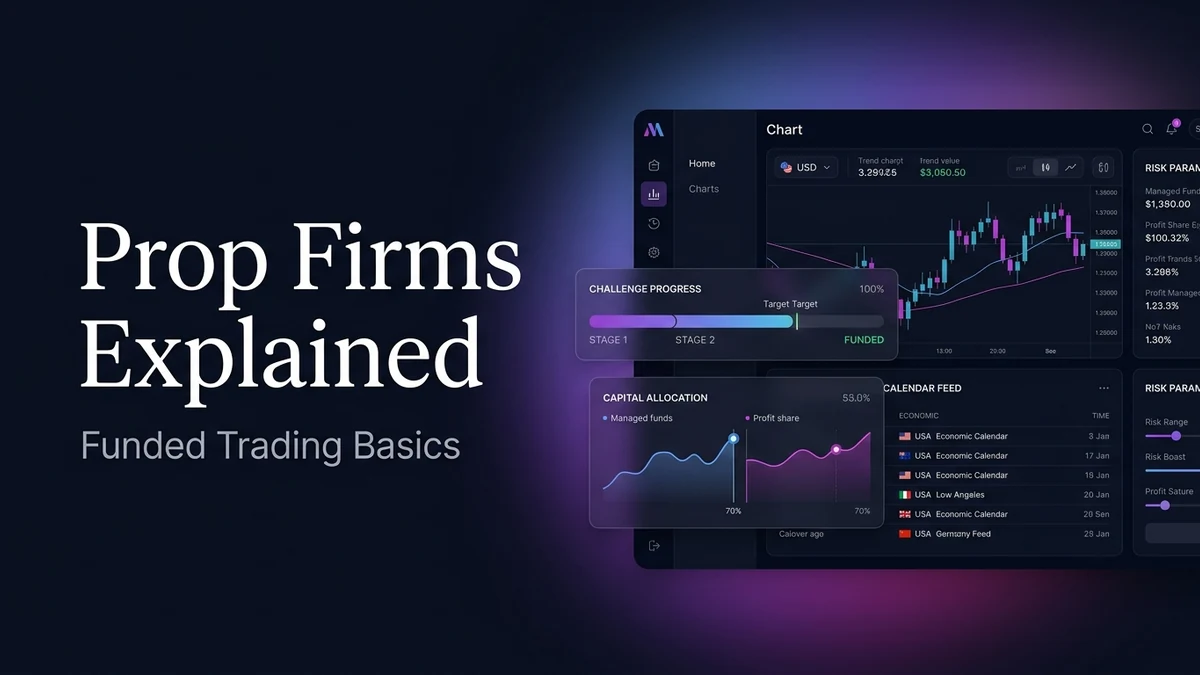
Prop firms, also known as proprietary trading firms, give traders access to funded accounts after they pass specific evaluation rules. Instead of trading only personal capital, a trader may qualify to trade a larger account and share profits with the firm.
Most funded trading programs start with a challenge. The trader must reach a profit target while respecting rules such as maximum daily loss, maximum total drawdown, minimum trading days, and restricted trading behavior. If the trader passes, they may receive access to a funded account.
Prop firms became popular because they allow skilled traders to access larger capital without needing to deposit the full account size themselves. However, funded trading is not easy. Many traders fail because they over-risk, rush the challenge, or ignore drawdown rules.
The most important part of prop firm trading is rule discipline. A trader may have a profitable strategy but still fail if they break risk limits. Every firm has different rules, so traders must read the terms carefully.
Funded trading can be useful for traders who already have discipline, risk control, and a tested strategy. It is not a shortcut for beginners who have not learned the basics yet.
Before joining any prop firm, traders should understand fees, payout rules, trading restrictions, account scaling rules, and whether the firm's model is suitable for their strategy.