
Institutional investors, asset managers, funds, and ETF products now play a larger role in the Bitcoin market.
For beginner traders, this matters because Bitcoin can move based on ETF flows, institutional demand, risk appetite, and macro conditions.
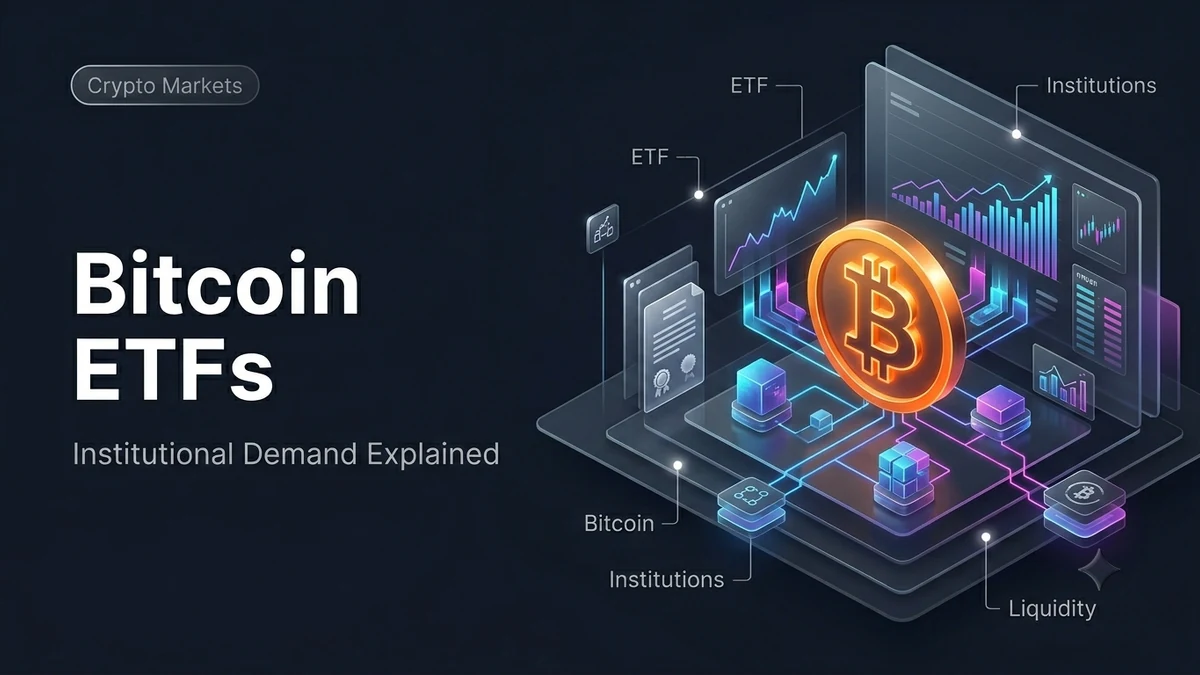
What Is a Bitcoin ETF?
A Bitcoin ETF is an exchange-traded fund that gives investors exposure to Bitcoin through traditional financial markets.
Instead of buying Bitcoin directly through a crypto wallet or exchange, investors can access Bitcoin through a regulated market product.
This can make Bitcoin easier for institutions and traditional investors to include in portfolios.
Why ETFs Matter
ETFs can bring more liquidity and attention to Bitcoin.
When ETF demand is strong, it can support market sentiment.
When ETF flows slow down or turn negative, traders may become more cautious.
ETF activity does not control Bitcoin completely, but it is now an important part of the market.
Institutional Demand
Institutional demand means large investors are paying attention.
This can include funds, family offices, asset managers, and listed companies.
Institutions often think differently from retail traders.
They may focus on allocation, regulation, liquidity, custody, risk controls, and macro conditions.
This can make Bitcoin behave more like a global risk asset.
Bitcoin and Market Sentiment
Bitcoin can rise when risk appetite is strong.
It can weaken when traders reduce exposure to risky assets.
This is why Bitcoin traders should watch stocks, the U.S. dollar, interest rates, liquidity, and ETF flows.
Bitcoin is still crypto, but it is also connected to global financial markets.
What New Traders Should Learn
New traders should not only watch Bitcoin charts.
They should also understand the forces behind the move.
ETF inflows, institutional demand, Fed expectations, dollar strength, and risk sentiment can all affect Bitcoin.
A chart can show price action, but context explains why the move may be happening.
Practical Takeaways
- Watch ETF flow headlines and institutional demand.
- Follow major macro events such as Fed decisions and inflation reports.
- Monitor the U.S. dollar and risk appetite.
- Avoid chasing Bitcoin after large news-driven moves.
- Use stop losses and proper position sizing.
- Treat Bitcoin as a volatile asset, even when institutions are involved.
Final Thoughts
Bitcoin ETFs have changed how many investors access crypto.
They connect Bitcoin with traditional finance and bring more institutional attention to the market.
For traders, this creates opportunity, but also requires more awareness.
Masterrit helps traders understand crypto and traditional markets with education, insights, signals, and AI tools.